
Schizophrenia Awareness Day 25th July 2026
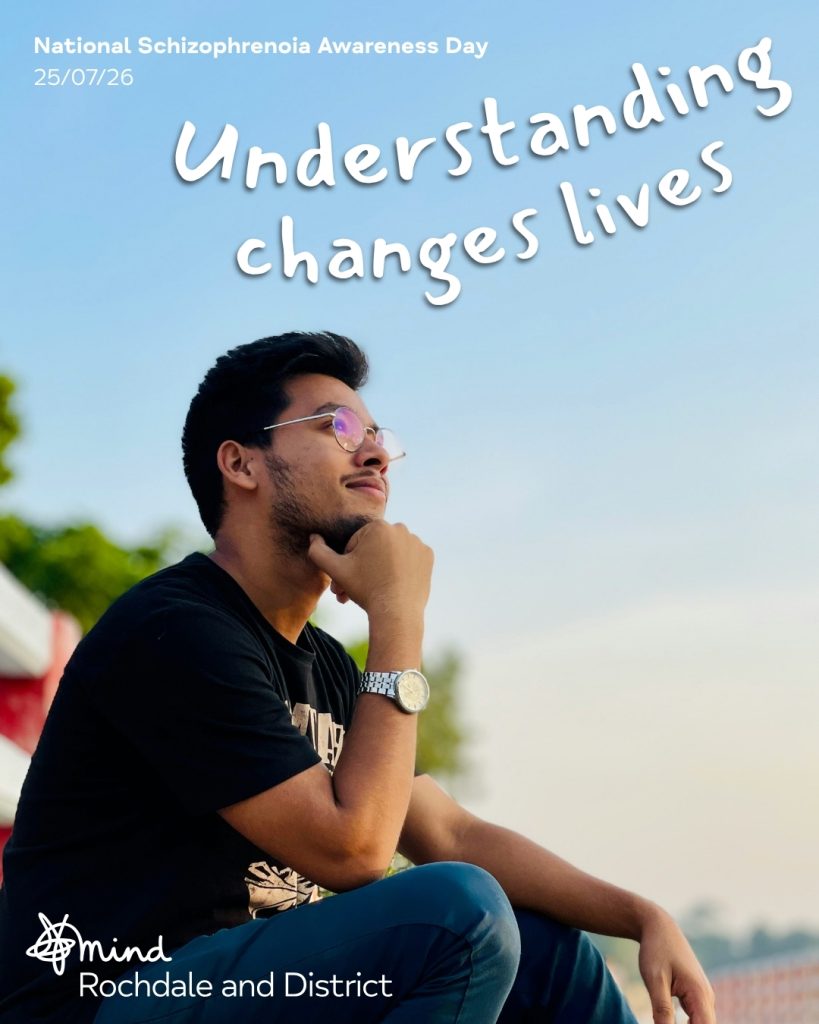
25 July 2026 marks National Schizophrenia Awareness Day
– an opportunity to raise awareness, challenge stigma, and promote understanding of schizophrenia and its impact on individuals, families, and communities.
Schizophrenia is a severe mental health condition that affects approximately 1% of the world’s population, with more than 600,000 people in the UK living with the condition. Through education and open conversation, we can help dispel myths, reduce stigma, and create a more supportive environment for those affected by schizophrenia.
The following information is taken from National Mind’s webpage on Schizophrenia:
What is schizophrenia?
‘Schizophrenia’ is a controversial mental health diagnosis related to psychosis.
But there’s no clear definition of what this condition is. People given this diagnosis can have very different symptoms to each other. And these symptoms might be explained in a wide range of ways.
So there’s lots of debate and disagreement about schizophrenia.
Because of this, some experts say that doctors shouldn’t use this diagnosis anymore.
Especially because it can be a stigmatising and difficult label to live with.
But others still find it a useful diagnosis to convey how hard it can be to live with certain symptoms. And to help people get support and care.

What is paranoid schizophrenia?
‘Paranoid schizophrenia’ is an outdated term.
Schizophrenia used to be split up into lots of different diagnoses. One of these was ‘paranoid schizophrenia’. So you might have been given this diagnosis in the past. And you might still hear people use this term in the news and media.
But schizophrenia isn’t diagnosed this way anymore. It’s just called schizophrenia.

What are the symptoms of schizophrenia?
Many experiences and behaviours can be part of schizophrenia.
Each person’s experience is unique.
But a doctor might say you have schizophrenia if you experience some of the following for at least 1 month:
- Delusions – strong beliefs that others don’t share
- Hallucinations, such as hearing voices or seeing things that others don’t
- Disorganised thinking and speech
- Being unable to express emotions, or feeling disconnected from them
- Difficulty concentrating
- Lack of interest or enjoyment in things
- Avoiding other people, including friends and family
You might also find it difficult to continue with day-to-day activities. Like going to work or taking care of yourself.
Schizophrenia symptoms can start suddenly, or they might develop gradually over time.
Most people who get a schizophrenia diagnosis are between 18 and 35 years old. But symptoms can happen at any age.
Common myths about schizophrenia
There’s a lot of misinformation in the media about schizophrenia. Stories in the news, in films and on TV might be sensationalised for drama. They can be misleading. And sometimes false.
Some people may have negative or outdated ideas about schizophrenia. They may make assumptions about you that aren’t true.
The truth is:
- It doesn’t mean you have a ‘split personality’ or ‘multiple personalities’. Experiences like this are a part of dissociative identity disorder (DID). But schizophrenia isn’t anything to do with personality or identity.
- It doesn’t mean that someone will be dangerous or violent. Most people with schizophrenia do not commit violent crimes. Some research suggests that the risk is slightly higher among people who have this diagnosis than people who don’t. But it’s not clear that schizophrenia is the cause. Evidence shows that factors like drug and alcohol misuse are far more likely to play a part in violence.
People with schizophrenia are more likely to be victims of crime – or to harm themselves – than to harm someone else.
You might worry about having a label of schizophrenia, and the stereotypes. You might see yourself negatively too because of this stigma.
Remember that these wrong assumptions are often due to a lack of knowledge. Or bad information. You deserve support and respect.
For tips on how to cope with stigma see our page on stigma and misconceptions.
Movies and television would have you believe that having schizophrenia is a one-way ticket to a lifetime of loneliness and violent outbursts.
Read more about Schizophrenia here
Schizophrenia: Some useful resources:
Mental Health UK Schizophrenia Awareness Day webpage
Posted on: 2nd July 2026